
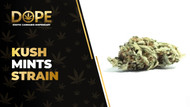
Kush Mints Strain
Nov 25th 2026
Kush Mints Strain: Genetics, Minty Flavor, Effects and Potency
Kush Mints is a hybrid cannabis cultivar associated with Seed Junky Genetics and created by crossing Bubba Kush with Animal Mints. Its reputation comes from a distinctive mix of cool mint, cookie sweetness, pine, spice and earthy Kush notes. Below is a practical guide to the strain’s lineage, aroma, reported effects and product-level differences.
Kush Mints strain at a glance
Alternative names: Kush Mintz and, in some catalogs, Kush Mint. Lineage: Bubba Kush × Animal Mints. Breeder: widely credited to Seed Junky Genetics. General classification: hybrid, with indica-leaning descriptions common. Signature aroma: mint, cookies, pine, herbal earthiness and gas. Effects: reviews often mention euphoria and relaxation, but experiences vary.
That brief profile is a useful introduction, not a substitute for product testing. A cultivar name describes genetics and reputation; it does not guarantee one THC percentage, terpene concentration, or predictable reaction in every person.
Kush Mints genetics: Bubba Kush meets Animal Mints
The pairing explains why the strain feels familiar to both old-school Kush fans and modern Cookies-family enthusiasts. Bubba Kush contributes a traditional earthy, woody and sometimes coffee-like aromatic direction. Animal Mints carries sweeter mint, vanilla and baked-cookie associations linked with the Cookies family. Their combination helped make Kush Mints a recognizable mint-forward hybrid.
The parents matter because 'Kush Mints,' 'Animal Mints' and 'Kush Mintz' are easy to confuse in search results. Kush Mintz is usually an alternative spelling of Kush Mints; Animal Mints is a distinct parent cultivar. A branded product containing 'Mints' in its name is not necessarily the same genetic cross.
Industry and strain references generally credit the cross to Seed Junky Genetics. Leafly, Weedmaps and other strain catalogs agree on the Bubba Kush–Animal Mints lineage. However, different breeders may market unrelated strains with similar words, so breeder attribution remains useful when comparing listings.
What does Kush Mints smell and taste like?
The first impression is often fresh and cooling, like mint leaves, menthol or peppermint candy. Underneath, reviewers describe warm cookie dough, subtle vanilla, earth, pine and a peppery or fuel-like finish. Some versions lean sweeter; others emphasize the classic Kush side with heavier herbal, woody notes.
Mint is an aroma description, not a guarantee that the strain contains added flavoring. Cannabis naturally produces many volatile aromatic compounds, and our perception of mint can result from a mixture of compounds rather than one simple ingredient. Storage, drying and curing can make the same genetic line smell quite different between producers.
Which terpenes are associated with Kush Mints?
Strain guides commonly discuss beta-caryophyllene, limonene, linalool, myrcene or pinene when describing the cultivar’s spiced, citrus, floral, earthy and pine-like notes. The precise balance is batch dependent. One store’s profile should not be copied as the dominant-terpene ranking for every flower lot labeled Kush Mints.
Caryophyllene is often associated with a peppery aroma, limonene with citrus peel, and pinene with pine. Linalool can smell floral, while myrcene is commonly herbal or musky. These aromatic associations do not establish that a cultivar cures anxiety, pain or insomnia; clinical effects cannot be inferred from a generic terpene list.
Kush Mints effects: what reviewers describe
Cannabis strain directories commonly feature consumer descriptions such as relaxed, euphoric, happy or mentally uplifted. A person may notice a change in mood first and more physical calm afterward, while another person may experience drowsiness or an uncomfortable degree of stimulation. Reports are not a controlled medical trial.
In practice, response is influenced by cannabinoid dose, route of use, individual tolerance, time since previous use and environment. The term 'balanced hybrid' is a lineage or marketplace category, not a measurable promise that every experience is half energizing and half sedating.
Is Kush Mints best for daytime or evening?
Many consumers describe it as a relaxed-evening option because of its commonly reported body effects. Others find modest exposure mentally bright or social. Rather than assign a rigid time of day, consider how strongly the specific product affects you and avoid tasks that require alertness or coordination whenever impaired.
What side effects are possible?
Potential adverse effects of THC-containing cannabis include dry mouth, dry eyes, dizziness, impaired short-term attention, anxiety, increased heart rate or paranoia. Potent products can be particularly challenging for inexperienced users. Do not drive or operate machinery while impaired, and keep products securely away from children and pets.
People who are pregnant, breastfeeding, under the local legal age or vulnerable to cannabis-related psychiatric effects should avoid use or seek qualified medical advice. A strain guide is informational and cannot diagnose or treat health conditions.
Kush Mints THC, THCA and CBD: why lab results matter
Kush Mints is widely described as a high-THC cultivar, yet published ranges differ. Those ranges may come from different growers, batches, labs and labeling rules. It would be misleading to claim that every Kush Mints flower has a fixed percentage of THC or that higher testing numbers always mean a better experience.
If the product is sold as THCA-rich flower, remember that THCA is a non-intoxicating precursor that can convert to THC when heated. Check how the package reports THCA, delta-9 THC and total potential THC, and look for a lot-specific certificate of analysis. A credible COA should also support product identity and relevant safety-screening claims.
CBD is usually not the headline cannabinoid in THC-dominant Kush Mints listings, but you should not assume it is completely absent. Only a laboratory result for the particular lot can answer that question accurately.
Bud appearance and grow characteristics
Kush Mints is often described as having dense, resinous green flowers with orange pistils and occasional purple coloring. The exact appearance varies by phenotype and environment. Attractive trichomes and a strong odor are not proofs of potency, authenticity or contaminant safety.
Growers familiar with resin-heavy hybrids may report robust flower development and pronounced aroma, but specific flowering time, canopy height and yield estimates depend on clone authenticity, climate, lighting and cultivation practices. Check breeder-specific information for the actual cutting rather than applying one online yield figure to every product called Kush Mints.
Because many cannabis flowers become dense near maturity, environmental care is important where home or commercial cultivation is lawful. Generic photos, impressive color and advertised 'top shelf' language cannot substitute for provenance and batch testing.
Kush Mints versus Animal Mints and Bubba Kush
Kush Mints is not simply a renamed Animal Mints. Animal Mints is one parent and is known for a sugary, mint-cookie profile. Bubba Kush, the other parent, is associated with classic earthy Kush depth. Kush Mints blends these family traits into a distinct selected hybrid.
DopeTHC’s Animal Mints strain guide explores the mint-cookie parent of this cross. For a comparison with traditional earthy aromas, see its Afghan Kush strain guide. Afghan Kush is a related style of cultivar, not a direct parent of Kush Mints.
How to identify a trustworthy Kush Mints listing
Look for the breeder or producer name, exact product form, batch identification and a recent COA. A menu description that only says 'minty, relaxing, 30% THC' without any supporting lot information should be treated as promotional shorthand. Also check whether 'Kush Mintz' is being used as an alternate spelling or for a different cultivar altogether.
When comparing two jars of the same name, freshness, storage, contaminant screening, terpene data and accurate labeling matter more than dramatic marketing photographs. Cannabis legality and permitted purchasing channels vary by location, so follow applicable local requirements.
Frequently asked questions
What strain is Kush Mints?
Kush Mints is a hybrid cannabis cultivar commonly attributed to Seed Junky Genetics and bred from Bubba Kush and Animal Mints.
Is Kush Mints indica or sativa?
It is generally classified as a hybrid, often described as balanced or indica-leaning. Those labels are not reliable predictors of a specific person’s effects.
Are Kush Mints and Kush Mintz the same?
Kush Mintz is a widely used spelling variant of Kush Mints, although a seller’s specific branding should still be checked.
Does Kush Mints smell like peppermint?
Many reports mention a cool mint or menthol note alongside cookies, pine, spice and Kush earthiness. Every batch will not smell identical.
How strong is Kush Mints?
It is widely regarded as a potent cultivar, but measured cannabinoid content varies. The only dependable percentage for a product is its batch-specific laboratory result.
Is Animal Mints the same as Kush Mints?
No. Animal Mints is one of Kush Mints’ two reported parents; Bubba Kush is the other.
Final take
Kush Mints is best understood as a recognizable Bubba Kush × Animal Mints hybrid with mint-cookie brightness balanced by classic earthy Kush character. Its popularity rests on its lineage and aroma, while actual potency and reported effects should always be considered product specific.