
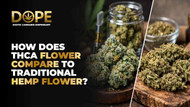
How does THCA flower compare to traditional hemp flower?
Feb 28th 2026
THCA Flower vs Traditional Hemp Flower: The Complete 2026 Comparison Guide
As the hemp and cannabis industries continue evolving into 2026, the distinction between THCA flower and traditional hemp flower has become more important than ever. Although both products originate from Cannabis sativa, they differ significantly in cannabinoid structure, psychoactive potential, regulatory scrutiny, consumer use cases, and market positioning. While they may look identical at first glance, their chemical behavior after heating creates two completely different user experiences. Therefore, understanding these differences is essential for consumers, retailers, and brands navigating the modern hemp landscape.
What Is THCA Flower?
THCA flower refers to cannabis flower that contains high levels of tetrahydrocannabinolic acid (THCA) while maintaining compliant delta-9 THC levels prior to heat exposure. THCA is the naturally occurring acidic precursor to THC found in raw cannabis plants. In its original state, THCA does not produce intoxicating effects. However, once exposed to heat through smoking, vaping, or combustion, THCA undergoes decarboxylation and converts into delta-9 THC. As a result, the flower becomes psychoactive after activation and can produce effects similar to traditional marijuana.
In 2026, THCA flower remains widely discussed because regulatory conversations increasingly focus on intoxicating hemp derivatives. While some markets still assess compliance based on delta-9 THC concentration alone, others now evaluate total THC potential when determining legality. This shift has made consumer education more critical than ever.
Key Points About THCA Flower
- High THCA concentration
- Converts into THC when heated
- Produces psychoactive effects after combustion
- Often indistinguishable from marijuana visually
- Subject to stricter regulatory review in 2026
What Is Traditional Hemp Flower?
Traditional hemp flower generally refers to CBD-dominant cannabis cultivated under federal hemp standards. Unlike THCA flower, this type is bred specifically to maximize cannabidiol (CBD) while keeping THC levels minimal. Even after smoking or vaporizing, CBD hemp flower does not convert into intoxicating THC levels. Therefore, the experience remains mild and non-psychoactive.
In 2026, traditional hemp flower continues to hold a strong position in wellness markets due to its predictable and functional effects. Because it does not rely on heat conversion for impact, its classification remains clearer in most regulatory frameworks compared to THCA products.
Key Points About Traditional Hemp Flower
- High CBD content
- Naturally low THC
- Non-intoxicating when smoked
- Often marketed for relaxation and stress support
- More stable under evolving hemp regulations
Chemical Differences: THCA vs CBD Dominance
The most important distinction between THCA flower and traditional hemp flower lies in cannabinoid chemistry. THCA flower is dominated by tetrahydrocannabinolic acid, which converts into delta-9 THC when heated. In contrast, traditional hemp flower is dominated by CBD, which does not convert into psychoactive THC under normal use conditions.
Additionally, potency discussions in 2026 frequently include total THC potential, calculated using the formula (THCA × 0.877) + delta-9 THC. This formula estimates how much psychoactive THC could result after decarboxylation. Therefore, a flower that appears compliant on a pre-heat delta-9 measurement may have substantial psychoactive potential once activated. This distinction continues to influence regulatory policy and compliance enforcement nationwide.
Effects Comparison: What Users Experience
Despite visual similarities, the user experience differs dramatically once consumed. THCA flower, after heating, produces psychoactive effects because of its conversion into THC. Users commonly report euphoria, altered sensory perception, enhanced mood, deep body relaxation, and strain-dependent sedation or stimulation. The overall effect profile closely mirrors traditional marijuana products available in licensed cannabis markets.
By contrast, traditional hemp flower delivers clear-headed relaxation without intoxication. Users typically describe subtle calmness, stress reduction, mild body ease, and improved mood stability. Since CBD interacts differently with cannabinoid receptors compared to THC, it does not impair cognition or create a euphoric high.
Effect Differences at a Glance
THCA Flower (After Heating):
- Psychoactive
- Euphoric and mood-altering
- Stronger body sensations
- Strain-specific intensity
Traditional Hemp Flower:
- Non-intoxicating
- Clear mental function
- Gentle relaxation
- Consistent mild effects
Market Positioning in 2026
The hemp market in 2026 has become increasingly segmented. THCA flower is often positioned toward consumers seeking dispensary-style potency without entering regulated marijuana markets. As a result, branding frequently emphasizes strain names, terpene richness, and elevated cannabinoid percentages.
Conversely, traditional hemp flower is positioned within wellness, lifestyle, and functional relaxation markets. Branding commonly focuses on calmness, balance, and natural support rather than intoxication. This divergence in positioning has created two distinct consumer demographics within the broader hemp category.
Key Market Trends in 2026
- Increased scrutiny of intoxicating hemp
- Higher consumer demand for transparent lab testing
- Greater emphasis on total THC disclosure
- Continued growth of CBD wellness consumers
Terpenes and the Entourage Effect
Both THCA flower and traditional hemp flower contain aromatic terpenes that influence flavor and effects. Terpenes such as myrcene, limonene, pinene, linalool, and beta-caryophyllene contribute to each strain’s sensory experience. However, the presence of THC significantly amplifies terpene-driven effects in THCA flower.
In CBD flower, terpenes support relaxation and balance without producing psychoactive synergy. Therefore, while both categories contain similar aromatic compounds, their interaction with cannabinoids creates different experiential outcomes. Understanding terpene profiles allows consumers to fine-tune their selection based on desired mood or effect.
Legal Environment in 2026
The legal landscape in 2026 continues shifting as lawmakers refine hemp policy. Federal definitions still focus on delta-9 THC concentration by dry weight; however, many states have implemented total THC standards or intoxicating hemp restrictions. This means that THCA flower legality may vary depending on jurisdiction and enforcement approach.
Because traditional hemp flower does not convert into intoxicating THC levels, it faces fewer regulatory challenges. Nevertheless, age restrictions, packaging requirements, and testing mandates have increased across both categories. As enforcement intensifies, compliance transparency and lab verification remain central to responsible distribution.
Consumer Safety and Responsible Use
Since THCA flower becomes psychoactive after heating, responsible use practices are critical. Consumers should avoid driving, operating heavy machinery, or engaging in high-risk activities after consumption. Additionally, first-time users should begin with small amounts to gauge tolerance and avoid overwhelming effects.
Traditional hemp flower presents minimal impairment risk, but moderation remains important. Safe storage away from children and pets is recommended for all hemp-derived products. In 2026, responsible consumption is increasingly emphasized in both retail and online markets.
Quality Factors That Differentiate Products
Beyond cannabinoid content, several quality factors distinguish premium products from lower-grade alternatives. Cultivation practices, curing methods, terpene preservation, moisture control, and batch consistency all influence overall experience. THCA flower often prioritizes potency perception and dense bud structure, while traditional hemp flower emphasizes smoothness and balanced CBD expression.
Consumers should always review Certificates of Analysis (COAs) to verify cannabinoid percentages and contaminant screening. In 2026, transparency in lab testing has become a primary trust indicator for hemp brands navigating tighter oversight.
Key Quality Indicators
- Verified third-party lab testing
- Accurate total THC disclosure
- Clean pesticide and heavy metal screening
- Clear batch identification
- Proper moisture and terpene preservation
Choosing the Right Option for Your Needs
Selecting between THCA flower and traditional hemp flower ultimately depends on desired outcomes. If you seek a cannabis-like psychoactive experience with stronger mood elevation or body relaxation, THCA flower aligns with that goal. If you prefer mild relaxation without impairment, traditional CBD hemp flower offers a more suitable solution.
Understanding tolerance, legal environment, and personal objectives ensures a more satisfying purchasing decision. Because regulatory interpretations continue evolving, staying informed in 2026 is essential for both consumers and retailers.
Final Comparison Summary for 2026
Although THCA flower and traditional hemp flower originate from the same plant species, they represent two distinct categories within the hemp market. THCA flower contains high levels of tetrahydrocannabinolic acid that convert into intoxicating THC when heated, producing psychoactive effects similar to marijuana. Traditional hemp flower contains high levels of CBD and remains non-intoxicating even after combustion, supporting functional relaxation and wellness use.
As hemp regulations continue tightening around intoxicating cannabinoids in 2026, understanding total THC potential, lab transparency, and state-specific rules is more important than ever. Ultimately, the defining difference remains clear: THCA flower becomes psychoactive after activation, while traditional CBD hemp flower does not.